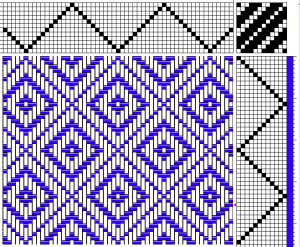
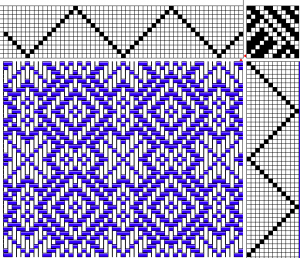
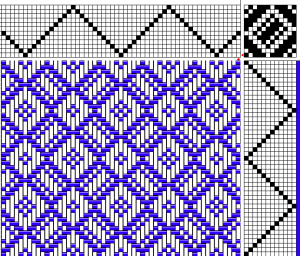
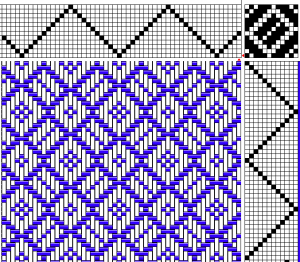
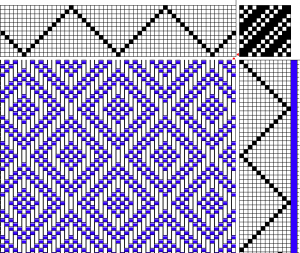
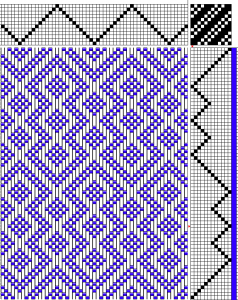
This is a food for thought post for people who wonder why I recommend obsessively making many small things when learning a new string related skill.
It all started with a comment that reminded me of the pottery school story.
Students in a pottery school were graded one of two ways. One group was graded on how many pots they finished, by weight, and the other group was graded on the best pot they produced.
To many people’s surprise, the first group produced, on average, much better pots.
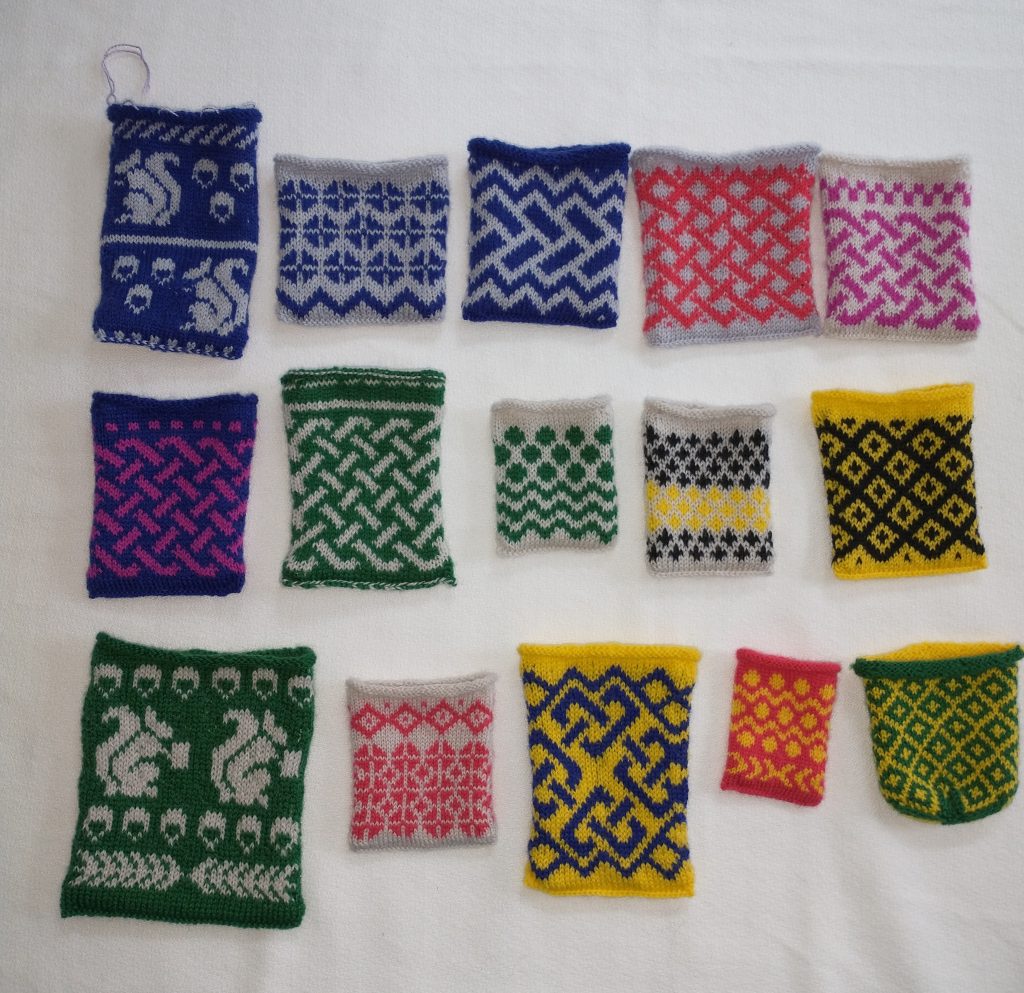
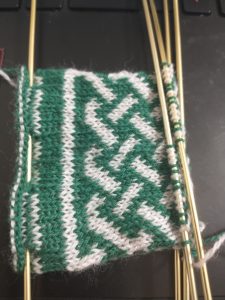
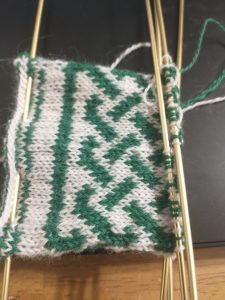
I’m seeing a similar metric play out in my tiny knitting. I’m just knitting little pouches. Each is small enough that I *will* finish it, even if its imperfect. Some mistakes are being repeatedly, until I eventually cut that out. Others are design features.
Even when I can’t visually spot the improvement, I can *feel* it. The fingers move more easily, the yarn tangles less, there is less need for coffee …
And there’s a similar effect in pattern designing. As I’m designing more little patterns, and then knitting them, I’m getting a better feel for how the knitting will look. I’m currently on my 19th or 20th pouch, I think. (I stopped counting, mostly.)
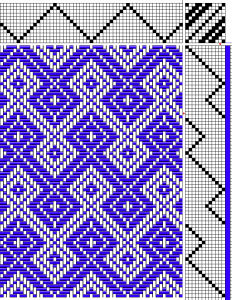
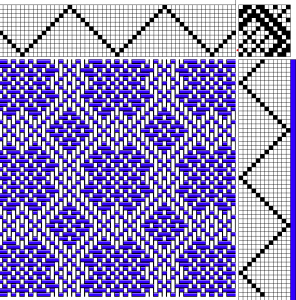
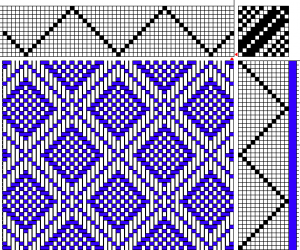
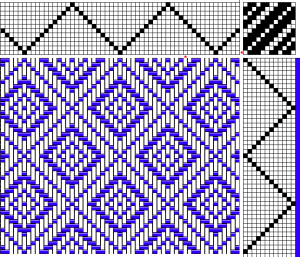
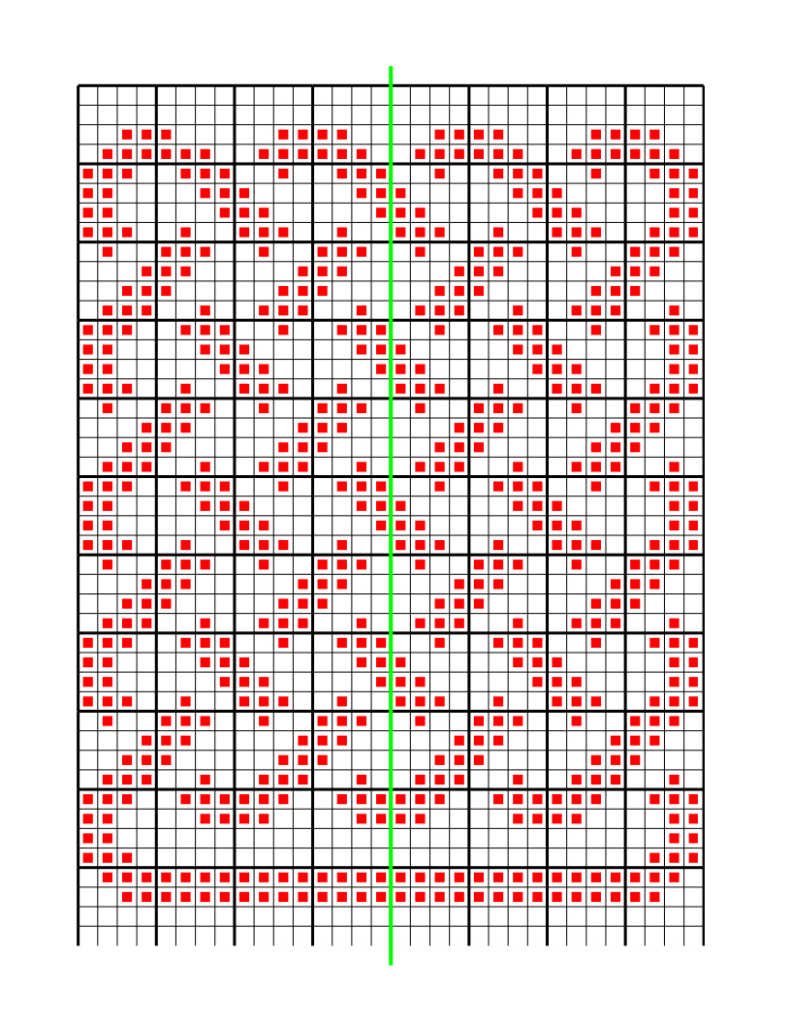
The patterns I’m knitting are all 2-stranded, so usually 2 colours at a time. That means the pattern graphs are simple grids. Usually 32 stitches (or 2 needles) wide, because when I’m making tiny pouches, they’re usually 74 stitches in the round. (I’m a computer geek: 8 stitches = 1 byte, so these are 8 byte pouches.)
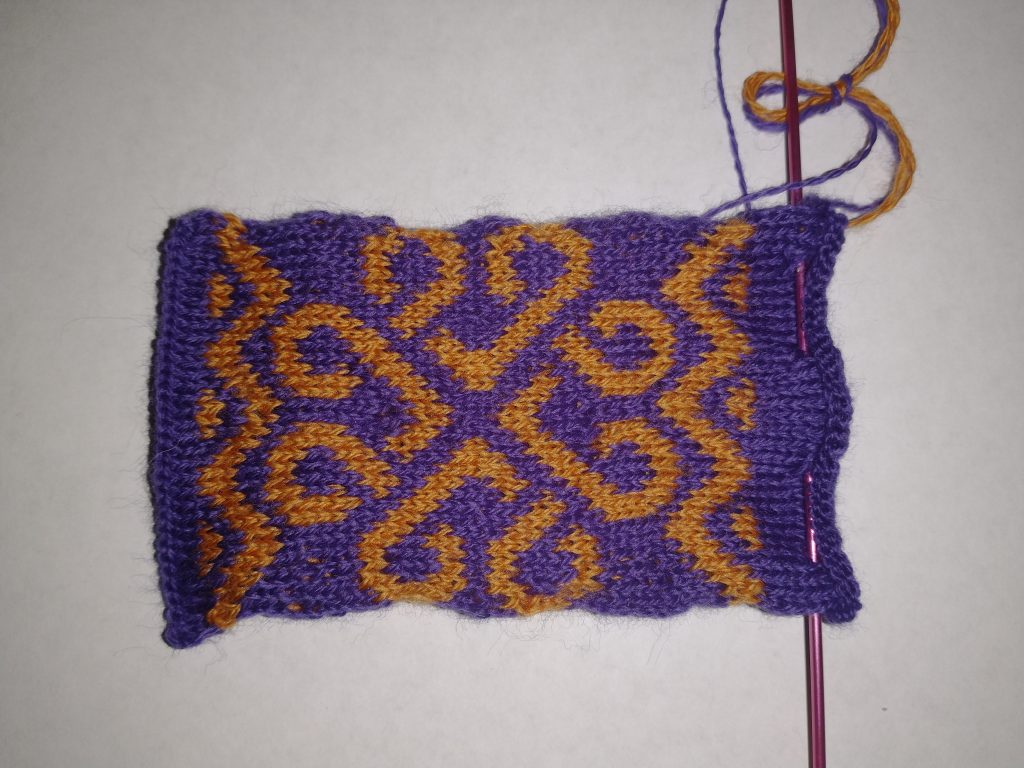
Knitted Version of Celtic Circles 2 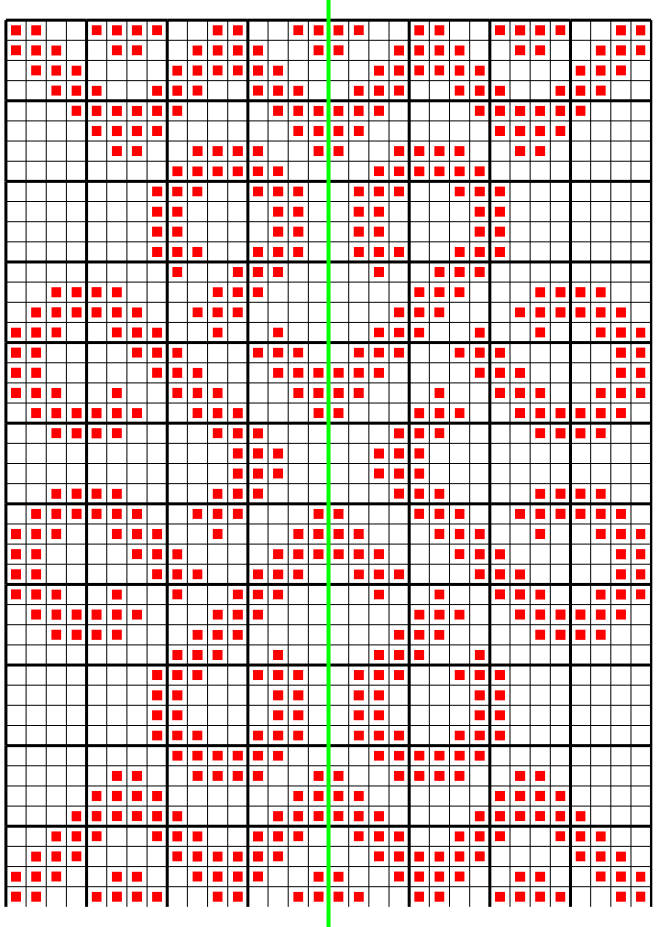
Second Celtic Circle variant 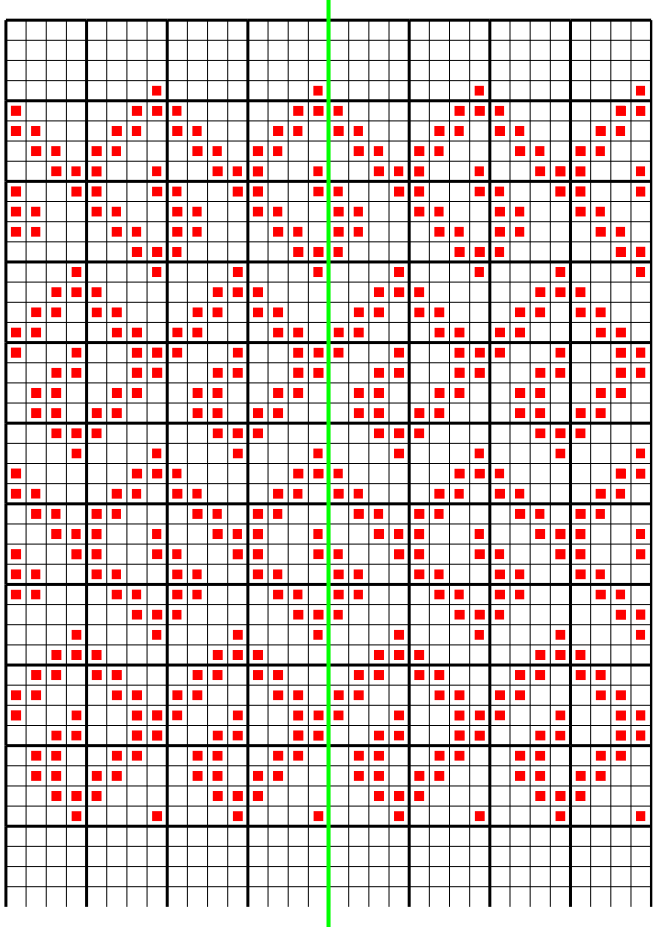
Greek Key Variant 1
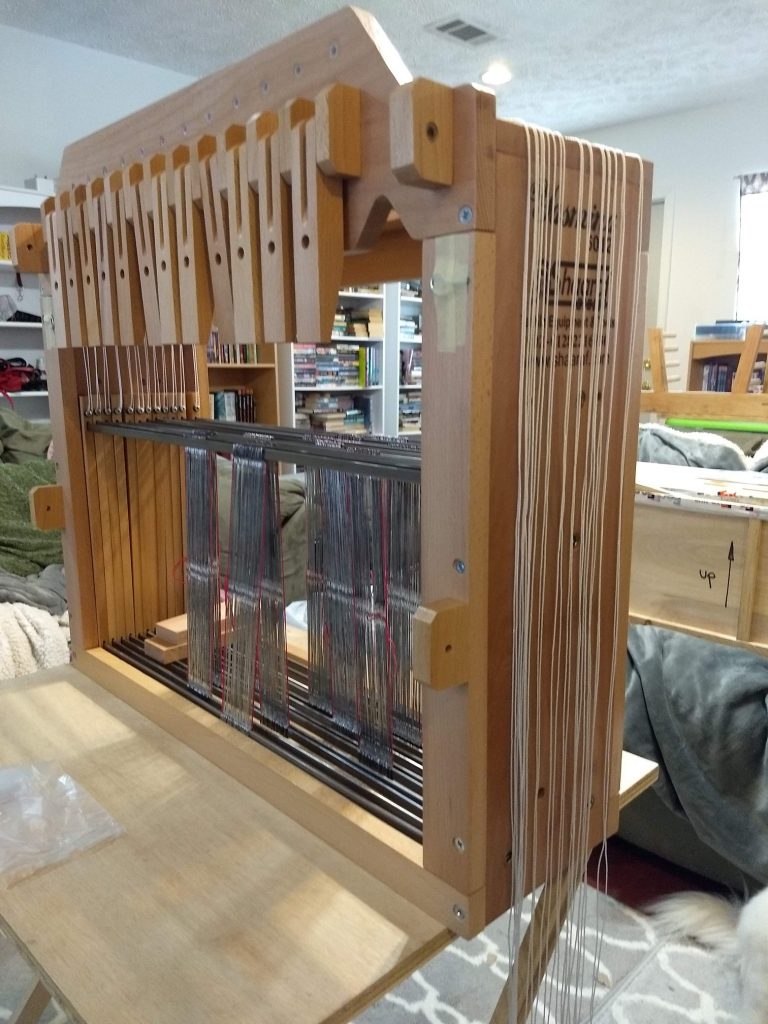
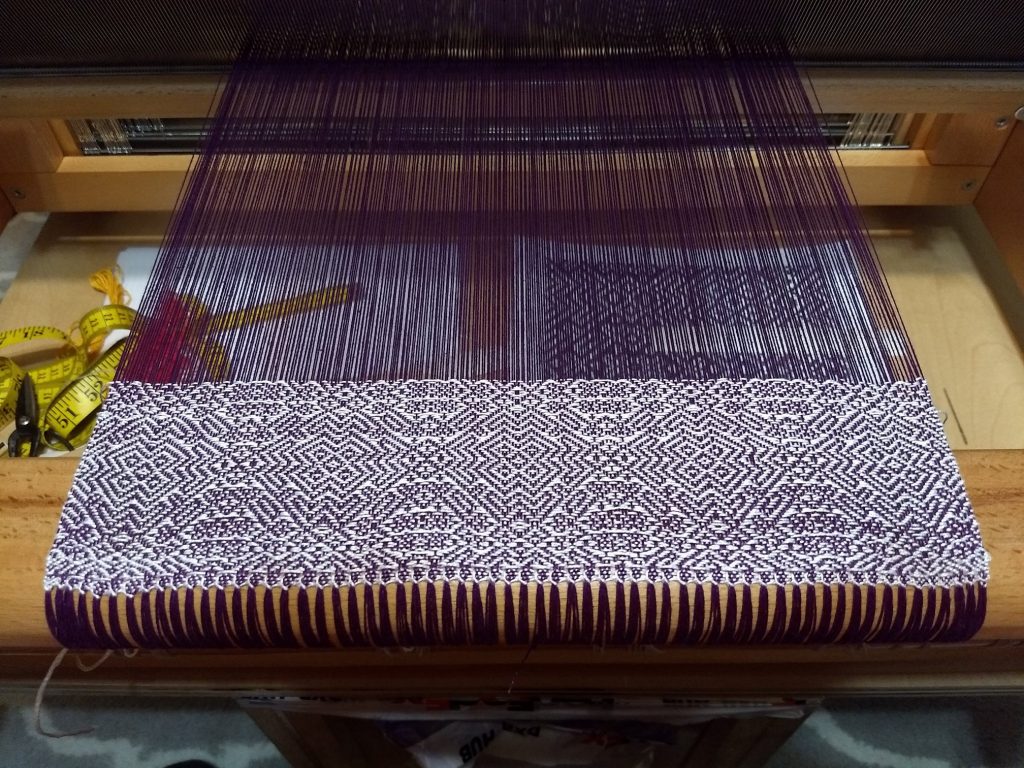
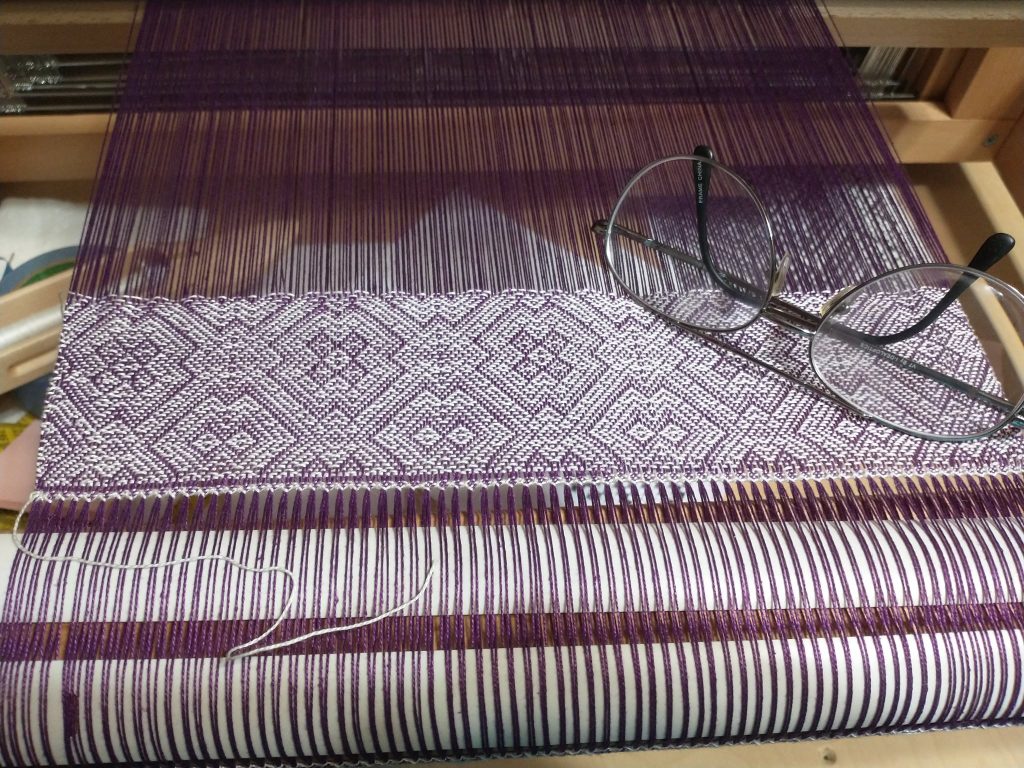
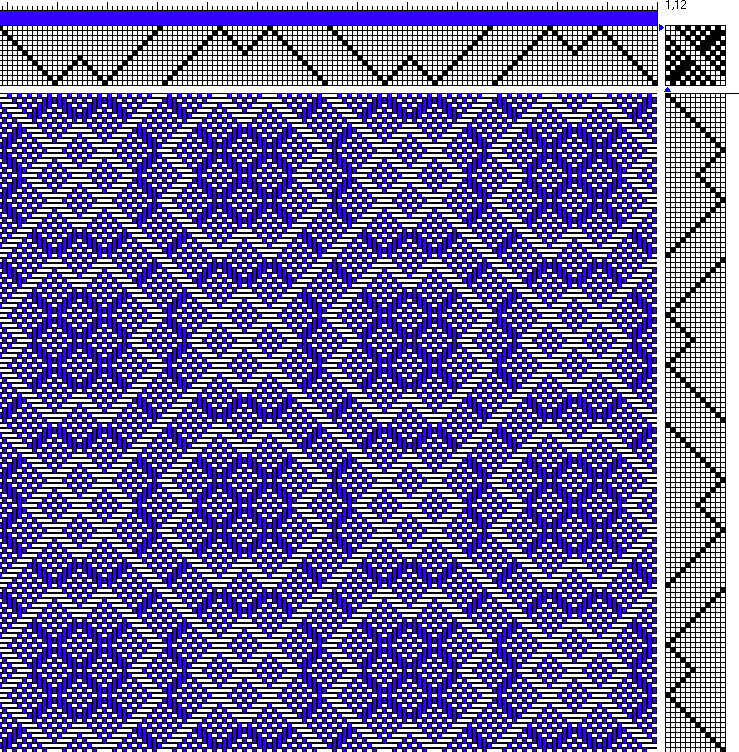
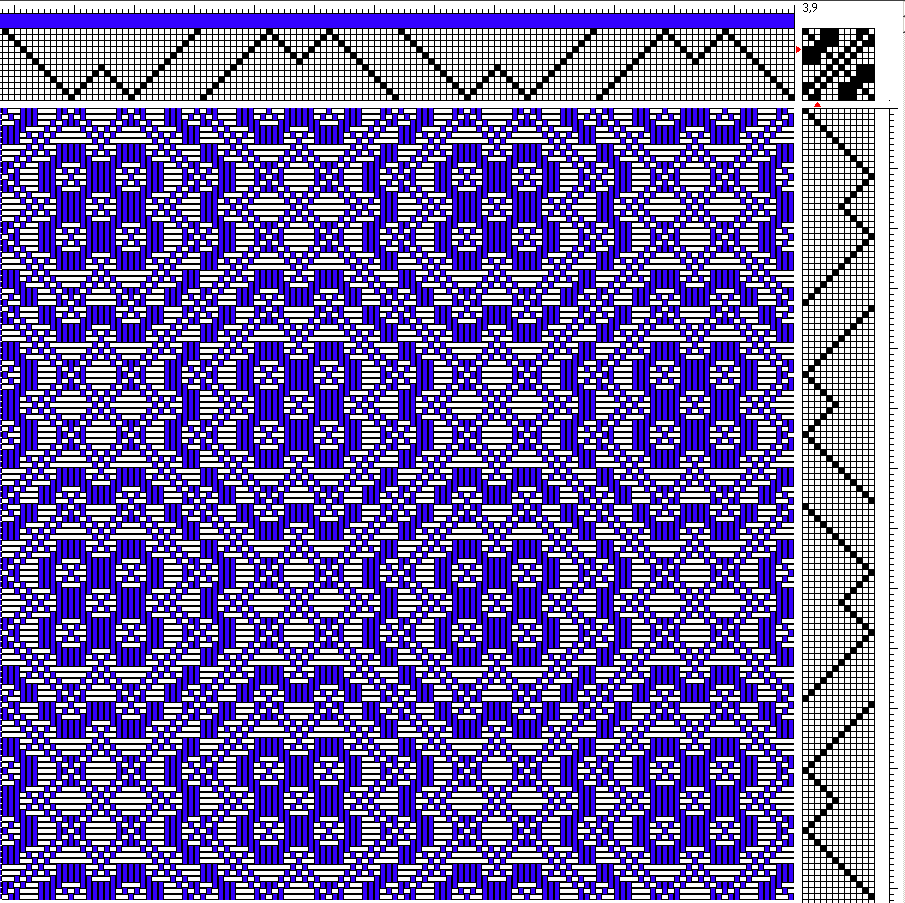
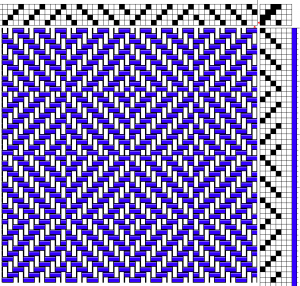
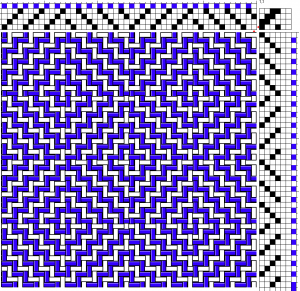
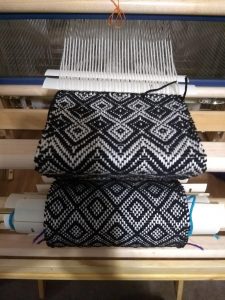 So while I’ve been quiet here, I’ve finally been weaving on the 12 harness Leclerc. The design of the loom, it turns out, has some major, and annoying, flaws. Worst is the way I can’t adjust the harnesses so that the string, traveling from back to front beam, lies flat. Since the heddle eyes are below this level, the strings all come off the backbeam, slant down, go through the heddle, and then slant back up. There’s enough distance between the first and twelfth harness that when all the harnesses are down there’s a visible deformation … And there’s tension issues, too. Between that, and getting the loom warped, and then trying to fix it, it took a little longer to get weaving than I had hoped.